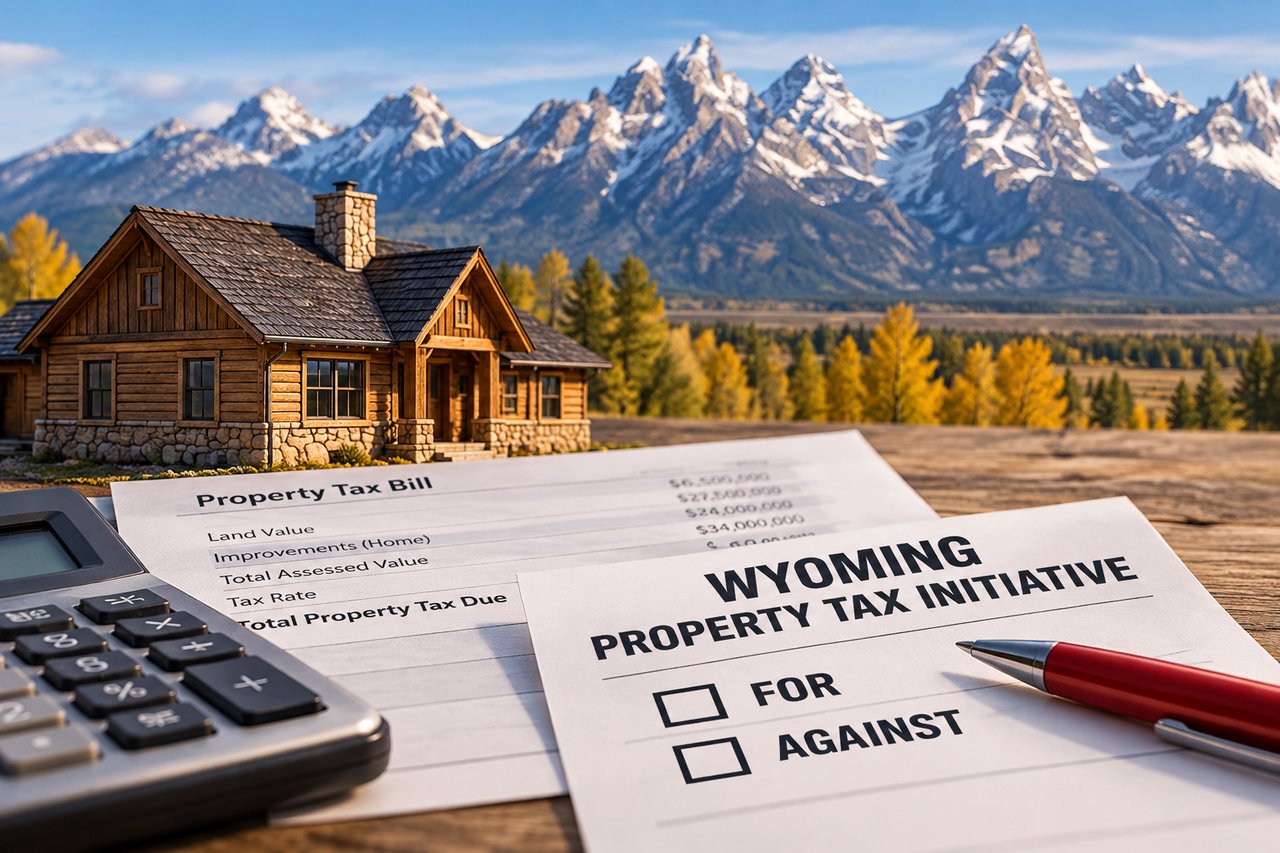
This November, Wyoming voters will decide on a citizen-led ballot initiative that could significantly change property tax bills for many homeowners. Whether you own a condo in town, a family home in Rafter J, or you're thinking about buying in the valley, it's worth understanding what's actually being proposed. The headline sounds simpler than the fine print.
What's on the ballot
The initiative would create a property tax exemption equal to 50% of the assessed value of a qualifying homeowner's primary residence. Voters will mark "for" or "against," and it needs more than half of all ballots to pass. One detail many people miss: a blank response on this question counts as a "no" vote. If you want your voice counted either way, fill in that bubble.
It's not a 50% tax cut
This is the most important thing to understand. The exemption applies only to the value of the home itself, not the land it sits on. Wyoming assesses land and structures separately, and the land portion of your bill wouldn't change.
In a place like Teton County, where land values are substantial, that makes a real difference. Teton County Assessor Mel Shinkle shared several examples with the Jackson Hole News&Guide:
- A Jackson condo valued around $1.3 million, with about $120,000 in land value, currently pays close to $7,000 a year. With the exemption, that bill could fall to roughly $4,000.
- A mid-range home valued at $6.1 million, with a current bill near $40,000, could drop to about $24,000.
- An ultra-luxury home worth around $28 million, which received a $177,000 bill this year, could see that fall to about $100,000. The roughly $24,000 attributed to the land stays the same; only the structure's portion is reduced.
For context, Shinkle says the median residential tax bill in Teton County is about $6,000, and the average is around $11,000. Most homes in neighborhoods like Rafter J, Cottonwood, and in-town condos fall closer to that median.
Who would qualify
The exemption isn't automatic. Homeowners would need to opt in by submitting a sworn claim to the County Assessor's Office stating that they've lived in Wyoming for at least a year and live in the home at least six months of the year. That means second homes, vacation properties, and investment rentals wouldn't qualify. This is a meaningful distinction in our market, where many properties are owned by part-time residents.
A few other details to know:
- You can only claim one exemption per year, so this couldn't be stacked with other property tax relief programs the Legislature has passed.
- Assessments go out on the fourth Monday in April, and the claim deadline would be the fourth Monday in May. If you haven't filed before assessments are mailed, the exemption won't appear on that notice, but you'd still have until the May deadline to claim it.
The bigger picture: local funding
Residential property taxes in Wyoming don't go to the state's general fund. Most of that money supports public schools and local governments. State analysts estimate roughly $109 million in residential value could be exempted statewide in the first year, and Teton County's residential property tax revenue could fall by more than $27 million. Because homeowners must opt in, the exact impact is impossible to predict.
Where the two sides stand
Supporters, led by organizers who began the petition in 2023, see the initiative as needed relief for homeowners facing rising tax bills. They argue the Legislature hasn't done enough and that cutting a qualifying homeowner's assessed value in half isn't the same as cutting government revenue in half. The Wyoming Republican Party recently voted to back the initiative with financial and marketing support.
Opponents have formed a coalition called "Vote No on Prop 1," which includes the Wyoming Education Association, the Wyoming Hospital Association, community college trustees, the Wyoming Taxpayers Association, and, as of this month, Wyoming Realtors. They're concerned about the long-term impact on schools and local services. Locally, county commissioners, town councilors, school district officials, and St. John's Health trustees have also raised concerns.
It's also worth noting how rare this is: since 1968, only three citizen initiatives in Wyoming have become law out of 36 attempts.
The bottom line
If you're a full-time Teton County homeowner, this initiative could lower your bill, though likely by less than half. If you own a second home or investment property, it wouldn't apply to you directly, but changes in local funding could still affect the community you're invested in. Either way, it's worth reading the full ballot language before Election Day.
If you have questions about how property taxes factor into buying or selling in Jackson Hole or Teton Valley, I'm always happy to talk it through.
Source: Jackson Hole News&Guide. For questions about your specific property, contact the Teton County Assessor's Office. This post is for informational purposes and isn't tax or legal advice.