If you are searching south of Jackson, one question tends to shape everything else: do you want the structure of a neighborhood or the freedom of open acreage? It is a meaningful choice because in this part of Teton County, lifestyle is tied not only to the home itself, but also to roads, utilities, access, maintenance, and the character of the land around you. Understanding those tradeoffs can help you buy with more confidence and fewer surprises. Let’s dive in.
Why this choice matters south of Jackson
South of Jackson has a different feel than a typical suburban market. County land use rules for rural areas emphasize preserving wildlife habitat, scenic vistas, and undeveloped open space, which helps explain why acreage properties and planned neighborhoods can feel so distinct from one another in this corridor. You can see that focus in the county’s rural area land development framework.
Access is also part of the conversation. Teton County’s planning efforts in the South Park and US 89-191 corridor, including work south past Red House Road and the proposed Tribal Trail Connector planning area, reflect how important travel redundancy, multimodal connectivity, and emergency access are in this area. For you as a buyer, that means the neighborhood-versus-acreage decision is about much more than lot size.
Planned neighborhoods offer more structure
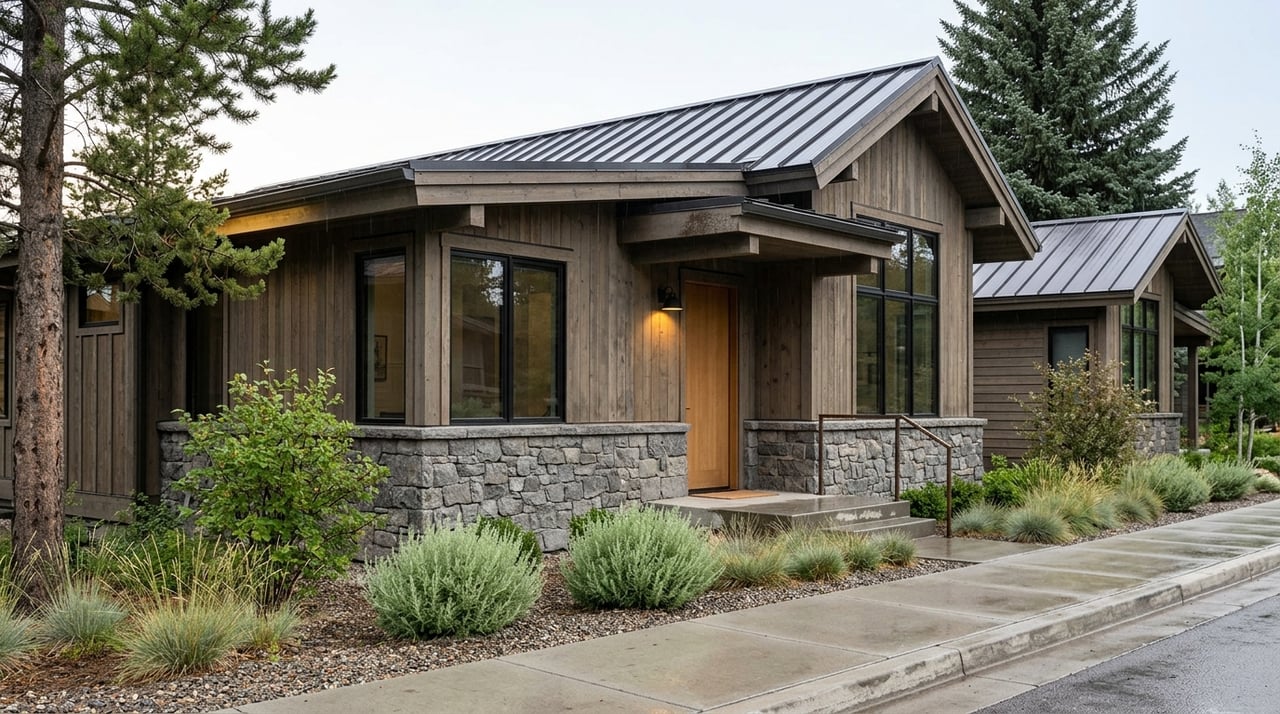
If you want a more predictable ownership experience, a planned neighborhood may feel like the easier fit. Teton County subdivision standards require newly subdivided property to be served by roads, water and sewer infrastructure, utilities, parks, and other physical improvements necessary to safely serve the development, according to the county’s land development regulations.
That structure often creates a clearer framework for daily life. In many planned neighborhoods, responsibilities around roads, utilities, and shared improvements are more organized than they are on rural parcels. The exact setup still depends on the specific development, but the county’s rules create a foundation that is generally more coordinated.
Infrastructure is usually more organized
The county’s transportation rules note that local roads are normally the responsibility of developers, private citizens, homeowners’ associations, or special districts unless the county formally accepts them. For you, that often translates into clearer expectations about who handles plowing, maintenance, and shared access, even though details vary from one community to another.
This can be especially helpful if you prefer fewer unknowns. Instead of managing each component of access and infrastructure on your own, you may have a more defined system already in place. That can simplify day-to-day ownership and seasonal planning.
Connectivity can be a real advantage
County standards also require access for emergency and service vehicles and call for pedestrian and bicycle travel consistent with the Pathways Master Plan. Subdivision rules further require linkages to schools, parks, public lands, and pathways through the county’s development standards.
In practical terms, planned neighborhoods are often better positioned for buyers who value easier circulation and stronger connections to shared public spaces. If you like the idea of a home that feels more tied into existing infrastructure and mobility networks, that can be a meaningful advantage.
Open acreage offers privacy and autonomy
For many buyers, acreage south of Jackson is appealing for one simple reason: space. Teton County’s rural-area zones are intended to preserve wildlife habitat, habitat connections, scenic vistas, and undeveloped open spaces. The county also prioritizes wildlife corridors, scenic vistas, waterbodies, agricultural activities, pathways, and public land access in its open-space framework.
That planning approach is a big reason acreage can feel so compelling here. You may have more visual openness, more separation from neighbors, and more room for private outdoor use. If your goal is a quieter setting with a stronger rural character, acreage may line up well with that vision.
Rural uses may be part of the appeal
The county describes ranching and farming as part of Teton County’s western identity and an important tool for preserving open space, wildlife, and scenic resources. Open-space rules also allow agricultural uses such as fencing and corrals when they are tied to bona fide agriculture, based on the county’s rural-area regulations.
For some buyers, that flexibility is central to the lifestyle they want. You may be looking for room to spread out, land that supports rural uses, or a property that feels more connected to the landscape than to a neighborhood layout. When that is the priority, acreage can offer something a more compact development often cannot.
Acreage usually means more self-management
The tradeoff with open land is that more responsibility often shifts to you as the owner. Utilities are a major part of that. County rules require either public water, a central supply, or evidence of an individual well, and they require sewer connection within 500 feet of public sanitary sewer or septic approval otherwise under the county’s land development regulations.
If a property relies on a private well, testing matters. The Teton County health department advises private well owners to test at least once or twice a year and before a real estate transaction. That is an important practical detail when you are evaluating ongoing ownership responsibilities.
Road access can require hands-on oversight
Access on rural parcels can be more involved than many buyers expect. Teton County requires a road access permit to build or alter a driveway off a county road, and the property owner is responsible for the materials and construction shown on the approved sketch.
The county also reserves the right to inspect access installations and require maintenance or repairs. In other words, a long driveway or rural entry point may come with direct ownership obligations that are less common in a planned neighborhood. That does not make acreage less attractive, but it does make due diligence more important.
Daily convenience looks different in each setting
One of the clearest differences between neighborhoods and acreage is how each property supports everyday life. Planned neighborhoods are more likely to benefit from the county’s multimodal transportation approach, which emphasizes safe and convenient travel by vehicle, foot, cycle, or transit, as outlined in the county’s mobility planning work.
That often makes neighborhoods a stronger fit if you want simpler daily circulation and less hands-on management of access. Acreage properties, by contrast, tend to be less walkable and more vehicle-dependent, but they can offer more private outdoor space and a stronger sense of separation. The right fit depends on which form of convenience matters more to you.
Wildlife and land stewardship matter in both
No matter which path you prefer, countywide wildlife rules are part of ownership in Teton County. For example, refuse and recycling containers and dumpsters must comply with bear-resistant trash regulations.
This is especially relevant on acreage, where trash storage and service can feel more independent and exposure to wildlife may be more noticeable. Still, it is a useful reminder that living south of Jackson often comes with a close relationship to the surrounding landscape. For many buyers, that is part of the appeal.
Questions to ask before you buy
Whether you lean toward a neighborhood or open land, a few practical questions can clarify the real ownership experience quickly.
- Who maintains the road and who handles plowing?
- Who owns the driveway, culverts, and access improvements?
- Is water public, shared, or supplied by a private well?
- Is sewer available, or will the property require septic?
- What does the HOA cover, if there is one?
- Are there restrictions related to fencing, corrals, livestock, parking, or trash storage?
These questions are closely tied to the county’s road-access, utility, open-space, and trash rules. Asking them early can help you compare properties based on real long-term fit, not just first impressions.
Neighborhood or acreage: which fits you best?
A simple way to frame the decision is this: planned neighborhoods are often the convenience-and-structure option, while acreage is usually the privacy-and-self-management option. If you value predictable upkeep, shared infrastructure, and stronger connections to pathways or public improvements, a neighborhood may make sense. If you care more about land, autonomy, and rural character, acreage may be the better match.
Neither option is automatically better. The best choice depends on how you want to live, how much hands-on property management feels comfortable to you, and which tradeoffs are worth making for the setting you want. In a market as nuanced as Jackson and the surrounding Teton County corridor, clarity around those priorities can make your search much more productive.
If you want help weighing these tradeoffs property by property, Jennifer Reichert offers thoughtful, local guidance rooted in real on-the-ground experience across Jackson Hole’s neighborhoods, acreage, and land opportunities.
FAQs
What is the main difference between neighborhoods and acreage south of Jackson?
- Planned neighborhoods generally offer more structure around roads, utilities, and shared improvements, while acreage usually offers more privacy, open space, and owner responsibility.
What should you ask about road access on a rural property in Teton County?
- You should ask who maintains the road, who plows it, who owns the driveway and culverts, and whether any access work may require county permits or future maintenance.
What utility questions matter when buying acreage near Jackson?
- You should confirm whether the property uses public water, a shared system, or a private well, and whether sewer is available or septic approval is required.
Are planned neighborhoods south of Jackson more connected to paths and public spaces?
- County subdivision standards require linkages to pathways, parks, public lands, and other connections, so planned neighborhoods are often more integrated with shared infrastructure.
Why do bear-resistant trash rules matter for Jackson-area properties?
- Teton County requires bear-resistant refuse and recycling containers, which is an important ownership detail in both neighborhoods and acreage settings, especially where wildlife exposure is higher.