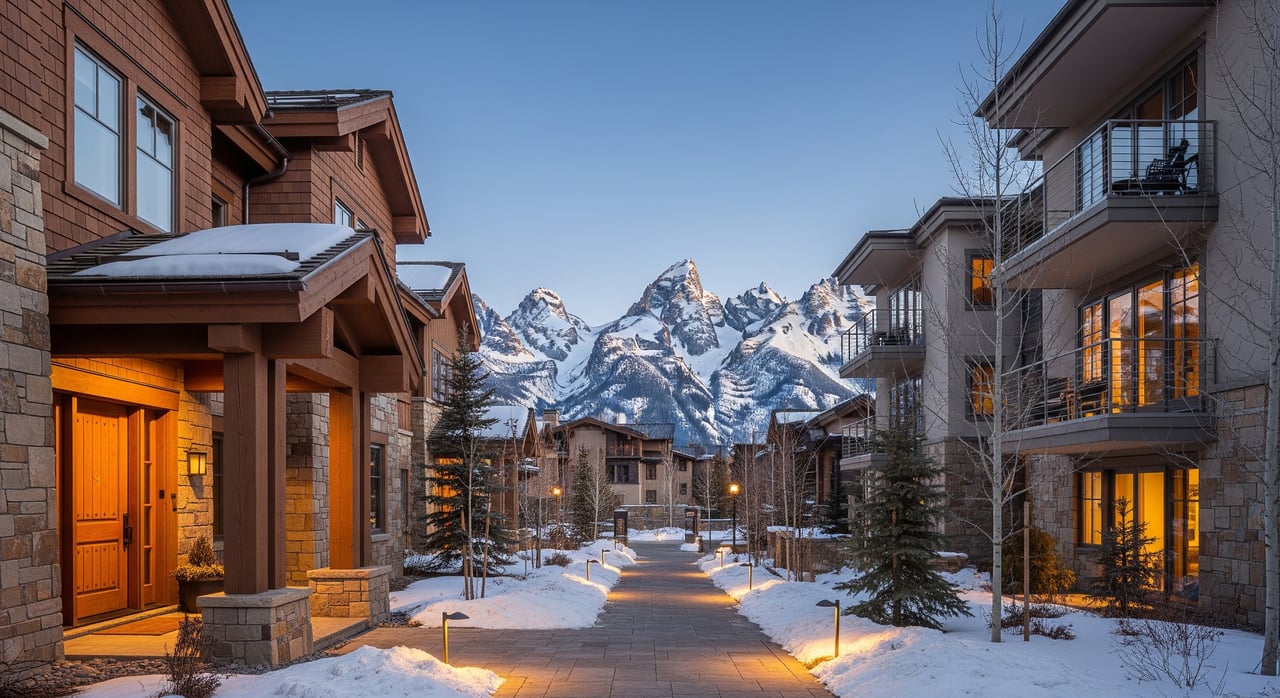
Picture stepping out your door and gliding to the gondola with your coffee still warm. That vision draws many buyers to Teton Village, yet the choice between a condo and a townhome can feel surprisingly complex. You want easy ski days, smart ownership, and potential rental income without unexpected hassles. In this guide, you’ll compare how each option fits life at the base of Jackson Hole Mountain Resort, from slope access and maintenance to HOA rules and rental considerations. Let’s dive in.
Teton Village market essentials
Teton Village centers around one thing: direct access to Jackson Hole Mountain Resort. Proximity to lifts and true ski-in/ski-out orientation are the biggest value drivers here. Properties closest to the slopes tend to command premiums and attract different renter profiles than similar homes set farther back.
Demand in Teton Village runs on two main peaks. Winter is the headline season for skiing, while summer brings hiking and national park adventures. Shoulder seasons are quieter, which affects both occupancy and how you’ll use the property.
Inventory is limited. Zoning constraints and scarce developable land keep supply tight, so availability often shifts with resale cycles and new construction phases. Local resort infrastructure such as parking, shuttles, pedestrian routes, and snow storage also influences day-to-day convenience.
Ownership and HOA basics
What you own
- Condo: You typically own the interior of your unit plus a shared interest in common elements. The HOA usually maintains the building exterior, roof, and common systems.
- Townhome: These may be fee-simple (you own the structure and often the land below) or legally structured as condos within a condominium regime. In Teton Village, some properties marketed as townhomes are legally condos, so it’s essential to confirm the deed, plat, and CC&Rs.
HOA rules and reserves
Resort HOAs set rules that shape daily living and rental flexibility. Regulations can address short-term rentals, pets, landscaping, exterior changes, and parking. In a high-snow environment, strong reserve funds and clear budgets for snow removal, roof work, and mechanical replacements are critical. Special assessments are not unusual if reserves fall short, so review meeting minutes and financials closely.
Insurance and liability
Condo owners generally carry an HO-6 policy for interior finishes and personal property, while the HOA holds a master policy on the exterior and common areas. Verify the master deductible and any exclusions. Townhome owners in a fee-simple setup may need an HO-3 or HO-5 policy covering the structure and land, with premiums reflecting local conditions like snow load and winter access. Ask how liability is allocated for shared walkways, parking, and ski access easements.
Lifestyle differences
Maintenance and daily living
If you want low-effort living, condos typically reduce your exterior responsibilities. The HOA commonly handles snow removal, landscaping, and exterior upkeep, which suits second-home owners and part-time residents. Townhomes can bring more private maintenance responsibilities, like driveways or small yards, but they often feel more like true homes for year-round living.
Space and privacy
Townhomes usually offer more square footage and multiple levels, often with private entries and garages. This extra space and separation can appeal to families or anyone seeking more privacy. Condos prioritize efficient layouts and shared corridors. Privacy varies by building design, but condos can feel simpler and more secure for lock-and-leave use.
Amenities and services
Condos in Teton Village frequently provide resort-style amenities such as hot tubs, pools, fitness rooms, front-desk or concierge services, gear storage, and shuttles. These features add convenience and can strengthen rental appeal. Townhomes may trade shared amenities for private decks, rooftops, and garages, which many full-time or longer-stay owners prefer.
Parking and storage
Parking is a practical factor in winter. Condos often provide assigned stalls or shared facilities and may not include garages, especially near lifts where space is at a premium. Townhomes commonly include attached or detached garages, which protect vehicles from snow and offer dedicated storage for skis and bikes.
Rental use and income drivers
HOA and local rules
Before you count on nightly income, start with the rules. Many resort-area HOAs restrict short-term rentals with bans, minimum-stay requirements, or registration processes. Some developments offer centralized rental programs that simplify operations in exchange for revenue sharing and less owner control. Local governments have their own short-term rental regulations and registration procedures, and owners must collect and remit lodging taxes for eligible rentals. Always confirm with both the HOA and local authorities.
Demand and seasonality
Expect revenue and occupancy to concentrate in winter and summer. Shoulder seasons are softer. Condos with easy lift access and robust amenities often perform well with short-term guests seeking convenience. Townhomes with multiple bedrooms and private features can attract families and groups during peak periods, though occupancy may dip more in off-peak months.
Cost line items
A rental pro forma should account for both fixed and variable costs. Fixed costs typically include your mortgage, property taxes, HOA dues, insurance, and utilities. Variable costs can include management fees, cleanings, maintenance, and marketing. HOA special assessments or larger capital projects can affect short-term returns, so review HOA histories with care.
Due diligence for rentals
If rental income matters to you, request the HOA’s rental policies, historical rental data if available, and any program agreements tied to the unit. Ask for recent occupancy and ADR information from the seller or property manager when possible. Check for blackout dates, owner-occupancy rules, and registration requirements. The right documentation will help you set realistic expectations.
Condo vs townhome: quick comparison
- Choose a condo if you want low maintenance, strong amenity access, and proximity to lifts for personal use and guest appeal.
- Choose a townhome if you value more space, a garage, and a layout suited to longer stays or year-round living, and you are comfortable with added maintenance responsibilities.
Practical buyer checklist
- Verify legal structure by reviewing the deed and plat. Confirm whether a “townhome” is actually a condo regime.
- Request the full HOA packet: CC&Rs, bylaws, rules, financials, reserve study, annual budget, and meeting minutes.
- Review the HOA master insurance policy and deductible, and confirm what your owner policy should cover.
- Confirm short-term rental allowances with both the HOA and local authorities. Ask about licensing, inspections, and lodging taxes.
- Ask for the history of special assessments and upcoming capital projects.
- If rental income matters, request rental histories and interview 2–3 local property managers about realistic occupancy and rates.
- Walk the logistics: parking location, ski storage, distance to lifts, and how snow removal works for walkways, stairs, and driveways.
- Visit in high season and shoulder season to assess access and neighborhood dynamics in different conditions.
- Consult a local real estate attorney or title company regarding easements, right-of-way, and any deed restrictions affecting ski access or rental use.
Which one fits your goals
If your top priority is effortless ski days and simple ownership, a condo near lifts with strong amenities will likely feel turnkey. If you want more room to spread out, a garage, and a primary residence feel, a townhome may be a better long-term match. Both can work for rentals, but rules and performance vary by development. The best choice comes from aligning your lifestyle, ownership structure, and rental goals with the realities of Teton Village’s micro-market.
Ready to explore your options
You deserve a clear, tailored plan for life at the base of Jackson Hole Mountain Resort. If you’re weighing a slope-adjacent condo against a spacious townhome, let a seasoned local advisor help you compare specific buildings, HOA rules, and rental paths. Start a personalized consultation with Jennifer Reichert to explore on- and off-slope options that match your goals.
FAQs
What’s the main difference between condos and townhomes in Teton Village?
- Condos typically include ownership of the unit interior with the HOA covering exteriors and common areas, while townhomes can be fee-simple or legally structured as condos; always confirm the deed and CC&Rs.
How does lift proximity affect value and rentals in Teton Village?
- Properties closer to lifts usually command premiums and stronger guest demand because ski-in/ski-out convenience is the dominant value driver here.
Are short-term rentals allowed for every condo or townhome in Teton Village?
- Not always; many HOAs have restrictions and local governments require registration and tax remittance, so verify both HOA rules and local regulations for each property.
What insurance do I need for a Teton Village condo or townhome?
- Condo owners generally carry an HO-6 for interior finishes and personal property, while fee-simple townhome owners often need an HO-3 or HO-5 covering the structure and land; confirm HOA master policy details and deductibles.
Do resort HOAs in Teton Village charge special assessments?
- Special assessments can occur if reserves are insufficient for big-ticket items like roof replacement or mechanical systems; review budgets and meeting minutes to understand risk.
Which option is better for year-round living in Teton Village?
- Townhomes often suit year-round living due to added space, private entries, and garages, while condos typically excel for low-maintenance, amenity-rich, lock-and-leave lifestyles.